
October 23, 2026 - PBS News Hour full episode
10/23/2026 | 57m 46sVideo has Closed Captions
October 23, 2026 - PBS News Hour full episode
October 23, 2026 - PBS News Hour full episode
Problems playing video? | Closed Captioning Feedback
Problems playing video? | Closed Captioning Feedback
Major corporate funding for the PBS News Hour is provided by BDO, BNSF, Consumer Cellular, American Cruise Lines, and Raymond James. Funding for the PBS NewsHour Weekend is provided by...
October 23, 2026 - PBS News Hour full episode
10/23/2026 | 57m 46sVideo has Closed Captions
October 23, 2026 - PBS News Hour full episode
Problems playing video? | Closed Captioning Feedback
Where to Watch PBS News Hour
PBS News Hour is available to stream on pbs.org and the PBS app.
Providing Support for PBS.org
Learn Moreabout PBS online sponsorshipGEOFF BENNETT: Good evening.
I'm Geoff Bennett.
Amna Nawaz is away.
On the "NewsHour" tonight: The Justice Department takes unusual steps in the final stretch before Election Day, seeking to block election results in Alaska and charging former FBI officials over the Hunter Biden investigation.
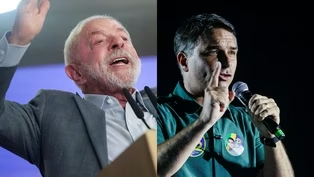
Brazil prepares for a high-stakes presidential run-off that could reshape that country's political future, as voters face a stark choice between left and right amid corruption scandals and deep political divisions.
PATRICIA CAMPOS MELLO, Editor at Large, Folha de S.Paulo: We have the tightest contest ever in Brazilian history, electoral history.
I mean, it's virtually tied.
GEOFF BENNETT: And millions of seniors scramble to find new health insurance after their Medicare Advantage plans shut down.
(BREAK) GEOFF BENNETT: Welcome to the "News Hour."
President Trump is making a final campaign push to help Republicans maintain control of Congress, as some of the country's most closely watched races remain competitive.
But the battle for the U.S.
Senate is also playing out in court.
In Alaska, the Trump administration has filed a lawsuit seeking to potentially block certification of the election if the Republican incumbent loses.
Our White House correspondent, Liz Landers, has been following both developments and joins us now.
So, Liz, let's start in Alaska, where the Justice Department has filed this unusual lawsuit.
Why is the DOJ getting involved?
LIZ LANDERS: The Department of Justice has taken a series of potentially political actions really close to Election Day now.
What was filed here in Alaska is, they're trying to block the certification of the vote there, but only if the Democrat, Mary Peltola, wins and beats the incumbent Republican Senator Dan Sullivan.
The issue here is that there is a-another candidate named Dan J. Sullivan, who's also on that ballot.
And Republicans are worried that voters could get confused by this.
But this has already been litigated by the Alaska Supreme Court, who said that Dan J. Sullivan could stay on this ballot.
Department of Justice is bringing this lawsuit, they say, to protect the integrity of the Senate election there.
They say in their lawsuit that the federal government could be harmed by this election certification if it is -- quote -- "tainted by a frivolous candidacy because that undermines confidence in the makeup and workings of the federal government."
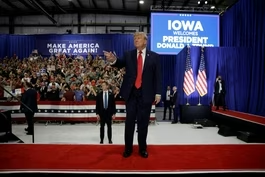
President Trump was asked about this earlier today.
DONALD TRUMP, President of the United States: I'm the one that said do it.
They have two guys run -- named Dan Sullivan running.
So the Democrats put up a guy.
I don't think he ever voted before.
All of a sudden, he decides to run for the Senate, and his name is Dan Sullivan.
One is Daniel S. One is Daniel J. The Daniel J. is the fake.
LIZ LANDERS: Daniel J. Sullivan has voted in Alaska races before, just to be clear.
But I asked the former Department of Justice civil rights attorney David Becker, who's also an election expert about this, and he said this is purely a matter of state law, and the Department of Justice has no authority and no role here.
He said that this kind of litigation is unprecedented to try to block the certification of an election 11 days before the vote.
GEOFF BENNETT: The Justice Department also announced charges today against two former FBI officials over their testimony about Hunter Biden's laptop.
What are they accused of doing?
LIZ LANDERS: The Department of Justice is claiming that these two FBI officials lied in congressional testimony that they gave in 2023.
And this was about their involvement in a specialized foreign influence task force in these investigations into Hunter Biden's laptop and that they knew about the laptop.
The attorneys for one of the former FBI officials who was charged here, Nikki Flores, said in a statement to the "News Hour" that: "The government's reasons for charging Nikki are as transparent as they are unjust to push a false narrative for a shot at political points."
Hunter Biden's laptop story broke just a few weeks before the 2020 election.
I'm sure you remember covering this.
The laptop contained e-mails that appeared to show discussions of Hunter Biden's foreign business dealings.
And at the time, Democrats questioned whether that was Russian mis- and dis-information.
GEOFF BENNETT: And so finally, with Election Day approaching, you have got some of the biggest names in politics, to include President Trump, hitting the campaign trail.
Who's heading where?
LIZ LANDERS: President Trump goes to Georgia tomorrow to help in that Senate race there.
Also, he's headed to Michigan on Sunday.
Mike Rogers is in a tough election there, the Republican against the Democrat, Abdul El-Sayed.
Also, former President Barack Obama will be in Michigan as well tomorrow campaigning with Abdul El-Sayed, and he will also be going to Ohio as well.
The former president has also cut a bunch of radio ads for other downballot candidates.
GEOFF BENNETT: Liz Landers, a busy week for you.
Next week's going to be busier.
LIZ LANDERS: Indeed, yes.
(LAUGHTER) GEOFF BENNETT: Thanks, as always.
LIZ LANDERS: Of course.
GEOFF BENNETT: We start the day's other headlines with the latest on the war in Ukraine.
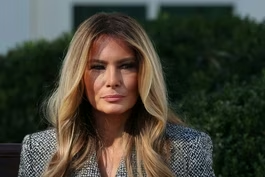
The White House says first lady Melania Trump has brokered a localized cease-fire deal in Oleshky, the Ukrainian city captured by Russia early on in the war.
The cease-fire would allow for humanitarian aid and evacuations from the town, which Mrs.
Trump said is -- quote -- "on the brink of disaster."
Following today's announcement, officials on both sides welcomed the agreement.
President Trump told reporters today it was the first lady's initiative.
DONALD TRUMP, President of the United States: What she wants to do is save children.
And that's her focus.
And both sides are cooperating with her, so doing a very good job.
GEOFF BENNETT: The cease-fire is set to begin next week.
Meantime, Romania's president has blamed Russia for a drone strike today that sank this cargo ship off its coast in the Black Sea, calling it a new example of Russian aggression beyond Ukraine.
At least one sailor was killed.
Three others were missing.
That's as Ukraine's President Volodymyr Zelenskyy said his military's access to Starlink satellite systems is still being interrupted, despite U.S.
assurances that it's running again at full speed.
VOLODYMYR ZELENSKYY, Ukrainian President: This is a real problem for us because the Russians attack us almost every day.
GEOFF BENNETT: Zelenskyy also said negotiators from the U.S., Ukraine and Russia have agreed to hold technical level talks in Abu Dhabi in early November.
Those would not involve political leaders.
Israeli Prime Minister Benjamin Netanyahu has ordered the army there to prepare for a full closure of the occupied West Bank after suspected gunmen shot and killed two Israeli soldiers.
Video from the Israeli army showed the firefight at a military checkpoint.
The two attackers, both Palestinian, were killed in the exchange of gunfire.
The army said it prevented the men from advancing towards civilians.
Following the shoot-out, Netanyahu blamed Hamas for the attack and vowed that Israel would retaliate.
BENJAMIN NETANYAHU, Israeli Prime Minister (through translator): We will act, first of all, to demolish this place, to change it completely.
We will evacuate the residents.
We will go house by house.
We will also remove the weapons there, and all the terror infrastructure will be dealt with and destroyed.
GEOFF BENNETT: After his comments, construction equipment could be seen starting to demolish homes near the site of the shooting.
All of this comes just days before Israeli elections, when voters will decide whether to give Netanyahu another term in office.
In China's Tibet region, first responders are racing to rescue survivors after a magnitude-7 earthquake struck the remote city of Nagqu.
State media says at least 16 people are dead and more than 50 others were injured.
Security camera footage showed the moment the quake struck as people fled into the streets.
Hundreds of homes were destroyed, leaving many people there displaced.
Local officials said multiple rounds of search-and-rescue have been complicated by the region's high altitude, low temperatures, and concern about further building collapses from aftershocks.
Here at home, a police officer in Mississippi has resigned days after state authorities cleared him in the fatal shooting of a 1-year-old boy during a suspected shoplifting incident.
Newly released body camera footage shows officers approaching a car in a Walmart parking lot in June guns drawn.
As the vehicle moved forward, Sergeant Hunter Foster fired into it, killing 1-year-old Kohen Wiley, who was sitting on his mother's lap.
Mississippi's attorney general ruled this week that the shooting was justified because the vehicle had moved toward an officer.
But Wiley's family disputes that finding and is calling for a federal investigation.
Kohen would have celebrated his second birthday on November 1.
President Trump signed an order today removing 50 percent tariffs on some Canadian goods, including those in agriculture and forestry.
The move is a bid to help Maine Republican Senator Susan Collins, who is facing a tough reelection race.
Many of Mr.
Trump's tariffs have put particular strain on businesses in Maine.
The changes become effective next Friday.
Meantime, stocks ended the week down as oil prices rose to their highest level since 2022.
The Dow Jones industrial average tumbled more than 600 points.
The Nasdaq had a more modest drop, and the S&P 500 slipped by half-a-percent.
Still to come on the "News Hour": how the high cost of diesel is putting Iowa in play this election cycle; Jonathan Capehart and Ramesh Ponnuru weigh in on the latest headlines; and a new documentary takes an unconventional look at Theranos founder Elizabeth Holmes, exploring the powers of truth, deception, and self-perception.
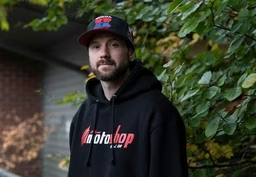
There's a new interview today with the first detailed comments from the man who stopped a school shooter in Bend, Oregon, one week ago.
Three students and a teacher were killed before the suspect was shot and killed by a father who has children of his own at the Silver Rail Elementary School.
That man is Kaylub Giamanco, who is a carpenter.
He told our colleagues at Oregon Public Broadcasting in this exclusive interview that he was heading home for lunch and driving by the school when he saw the shooter carrying a shotgun.
KAYLUB GIAMANCO, Stopped School Gunman: And then I proceeded into the parking lot, and I saw him walking all the way across the school, and I just was in full panic.
Like, no, there's children, there's babies in there.
And I told my Siri to call 911.
And the dispatch had picked up.
And I was reporting the incident.
But she was asking questions that they frustrated me, and I understand there's protocol, but she was asking me, do I know the person, all these things.
And I said: "I'm sorry.
I have to go in.
People are going to die."
And then I peeked through the window, and, at this point, I found my opportunity, and I seen a teacher on the left struggling with the gunman on the right with the rifle.
And I knew that they were -- they were both side to me, and I knew that he did not know that I was there.
And so at that point, I swung the door out and open, and I stepped in and I fired.
And they dropped to the ground, and the teacher sprang out of the building, thinking that I was a second shooter, and I could see the fear in her eyes, and that did hurt a lot.
But I could see the fear in her eyes.
She left the room, and this happens in seconds.
And then I looked down at the gunman, and he was scrambling for his weapon.
And I looked at him and I shot him two more times to make sure that he couldn't move, because I was afraid of him shooting anybody else.
GEOFF BENNETT: Giamanco also spoke of how he felt after he took down the shooter and of that day's larger tragedy.
KAYLUB GIAMANCO: Felt like I was having a heart attack almost the entire time.
I have never had so much chest pain.
I mean, I can't tell you what it feels like to take a life.
It's really not -- that's not how I thought that my Thursday was going to go.
But I can tell you that I genuinely feel like I was supposed to be there.
And if I wasn't there, I just don't know what would have happened.
The teacher that was wrestling with the gun with the gunman, I just -- I want to recognize her.
She gave me the opportunity to make my shot without losing my life.
I saw a clear shot to where I did not have to take her life.
Without her and that little spur-of-the-moment delay, I very much feel like I would have been facing the shooter head on, and we could have both died, or I could have died, and I felt like I was the last line of defense between me and the rest of the children in the school.
I don't know her name.
I would love to know her name.
I would love to give her a hug, because that's a real true hero to not have a weapon and to put yourself in between your babies and a firearm.
It's a lot, you know?
I really did want to speak with the families and the victims and just cry with them and hold them.
I want to apologize for not saving their babies.
That's probably the biggest thing for me right now, because the gratitude for saving people's children is awesome, but there's ones that I didn't save, and that's probably the hardest thing for me right now.
GEOFF BENNETT: Thank you again to our colleagues at Oregon Public Broadcasting for that interview.
It's been more than a decade since Iowa has had a Democratic governor or senator, but this year, with the incumbents retiring there, both races are competitive.
As Peter Tubbs of Iowa PBS reports, record high diesel prices have hit the state's agricultural industry especially hard and could influence the results.
PETER TUBBS: The ongoing war in Iran may be influencing the midterm elections in the Corn Belt.
Over the last eight months, farmers have seen the price of inputs go up, including a doubling of diesel fuel prices.
The increases are squeezing producers already up against tight profit margins.
AARON LEHMAN, Iowa Farmers Union: Whether that is seed, whether it's chemicals, whether it's repair costs, labor costs, right after the war, the prices for fertilizer and diesel spiked dramatically, and we have seen that continue all the way through to our inputs for harvest and what -- the fertilizer for next year.
PETER TUBBS: Aaron Lehman is president of the Iowa Farmers Union.
He's spending an additional $1,000 day to harvest and transport his crop, double his costs from 2025.
The fertilizer that fed his corn crop this season now costs 75 percent more than a year ago.
The topic of diesel prices and the pressure on farmers led off a debate between Iowa's U.S.
Senate candidates.
REP.
ASHLEY HINSON (R-IA), Senatorial Candidate: You talk about farmers and how we can help them.
It is about their bottom line and doing whatever we can to reduce energy costs, input costs across the board.
So I have proposed a several point energy plan, diesel prices being the top of mind there.
JOSH TUREK (D), Iowa Senatorial Candidate: When I'm out there with farmers, and especially at harvest time, talking about an all-time high of diesel, this is because of this war in Iran, and a war that Ashley Hinson has voted in favor of seven times.
It is hurting Iowans and it's hurting Iowa's in a unique way, and we need to provide some relief to Iowans.
PETER TUBBS: Lehman believes the jump in diesel and fertilizer costs are direct result of President Trump's war in Iran.
The White House announced this week an $8 billion bailout for farmers experiencing high diesel costs.
But high fuel prices could be a reason rural Americans, many of whom have supported Trump's policies, will vote against the Republicans on this year's ballot.
After being a swing state for decades, Iowa has voted for Republicans at the federal level the last two election cycles.
In a break from tradition, the Iowa Farmers Union has endorsed all the Democrats running for Congress.
AARON LEHMAN: That's unusual for us, but our farmers are facing such a huge crisis.
We really expect to have an Iowa response to that.
And this is meant to say we need a stronger response to what we're feeling here out on the ground.
PETER TUBBS: The Iran war and the rising price of diesel is being felt by farmers across the heartland.
In Kansas, the U.S.
Senate race is a toss-up, with incumbent Republican Roger Marshall facing a strong challenge from Pastor Adam Hamilton.
If Hamilton wins, he'd be the first Democrat to represent the state in nearly a century.
Despite the impact on his farm, Ron Suppes says he supports the Trump administration's war in Iran and will vote for Marshall.
RON SUPPES, Wheat Farmer: I'm going to tolerate it until the end.
I don't think it'll last that long.
I think it'll be over pretty soon.
I'm surprised that all of this happened before the election, but I think they ran into a situation where we need to do something now or never.
PETER TUBBS: Back in Iowa, agriculture represents only 3 percent of the state's economy, but farm business sets the political and emotional tone.
Low profits on Iowa's farms have a ripple effect to the economy as a whole.
It's part of the reason economic growth in Iowa has lagged behind its six neighboring states and the country at large for a decade.
AARON LEHMAN: I think people are really starting to have a conversation.
And a lot of people are saying, I need to reconsider.
PETER TUBBS: For the "PBS News Hour," I'm Peter Tubbs in Alleman, Iowa.
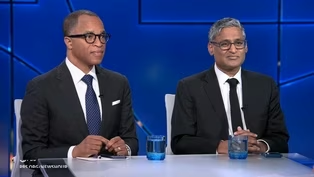
GEOFF BENNETT: For more on the Trump administration's legal fight over a closely watched Senate race in Alaska and the latest tensions surrounding the war in Ukraine, we turn to the analysis tonight of Capehart and Ponnuru.
That's Jonathan Capehart of MS NOW and Ramesh Ponnuru, editor of "The National Review."
David Brooks is away this evening.
Always great to see you both.
JONATHAN CAPEHART: Hey, Geoff.
GEOFF BENNETT: So, the Justice Department is now suing to potentially block certification of Alaska's Senate election if the Republican, Dan Sullivan, loses.
We have not had an election yet, to be clear.
Jonathan, what do you make of this president directing his DOJ?
He said that he's the one who told him to do it, to lay the legal groundwork to challenge a possible defeat.
JONATHAN CAPEHART: This disrupts, breaks, whatever word you want to use, all sorts of precedent, all sorts of new ground.
One, the president of the United States should not be directing the Department of Justice to do anything.
I mean, he's the first president to turn the Department of Justice into his own personal law firm.
That is not its role.
They are supposed to be about the laws of this country on behalf of the American people.
That's one.
Two, the executive branch and federal government have nothing to do with elections, period, anywhere.
And three, you showed -- I'm so glad you showed the ballot for everyone to see.
It is not going to be difficult to determine which Dan Sullivan, if you want to vote for which one, either one, which one you want to vote for?
Because incumbent Republican Dan Sullivan, it's right there in parenthesis.
So this is a lawsuit in search of a crisis or chaos, and it is my hope that, whatever happens with this, it is dispatched before the election, before Election Day.
GEOFF BENNETT: Is this -- and we see the ballot there that you were referencing?
So, Ramesh, is this a legitimate concern about election integrity with the competing Sullivans, or is this an effort to cast doubt on a election result before voters have even spoken?
RAMESH PONNURU, Senior Editor, "The National Review": Well, the lawsuit is asking for a non-certification in the case that Sullivan, Senator Sullivan, loses by a margin small enough that the votes for the other Dan Sullivan made the difference.
So that would be a very unusual kind of circumstance.
I think it's unlikely to happen that way.
It could be, frankly, that Mary Peltola, the Democrat running, just wins by a larger margin, given the way that the polling is looking.
Look, Republicans think that this is a dirty trick that the Democrats have played to sour the election, to taint the election.
The thing is, though, the Alaska Supreme Court said in June, he stays on the ballot.
Both of these Sullivans stay on the ballot.
Now, we don't know the court's rule -- the reasoning, because it hasn't released that reasoning.
It says that's coming out later.
But that's sort of the end of the matter legally.
As far as I can tell, there's no actual federal hook for the federal government to get involved.
So it's hard to see this lawsuit going very far.
GEOFF BENNETT: What precedent would it set if a president could use the Justice Department to delay certification of an election by simply alleging that, hey, voters might be confused?
JONATHAN CAPEHART: It would be a terrible precedent.
And also let's not forget this is yet one more action that he has taken to sow confusion about this upcoming midterm election, but this is in keeping with a practice he has done since January 6 of 2021, when he tried to overturn a free and fair election.
This is just one more gambit.
And I don't think it's going to work.
RAMESH PONNURU: It's interesting too.
Senator Sullivan's campaign said, we think our voters are going to be able to tell the difference.
GEOFF BENNETT: More to come on this on this story, for sure.
So we have been reporting throughout this entire week on this story first reported by The Wall Street Journal that Elon Musk ordered restrictions on Ukraine's access to his Starlink satellite communications network.
The Trump administration has been offering conflicting accounts of who authorized these restrictions.
President Trump says Musk has since restored the access, but you have Zelenskyy and Ukrainian military officials reporting that these disruptions continue.
When you look at this, I mean, we're talking about technology that is being used in an active war.
Has the U.S.
in many ways effectively outsourced part of its foreign policy to Elon Musk?
RAMESH PONNURU: Absolutely.
It seems as though we have got a partly privatized foreign policy.
And, look, the private sector has done enormously wonderful things in developing technology, but you do have to wonder about the wisdom of letting so much control of our policy be set by a private individual, one with his own political interests, his own political views, which are, frankly, not always perfectly grounded in reality.
GEOFF BENNETT: Musk is one of the Republican Party's biggest financial benefactors.
How do you see all of this?
JONATHAN CAPEHART: Look, I don't know if the administration has outsourced its foreign policy.
To me, it looks like we have a private citizen who is taking unilateral action in a war, one.
Two, I'm reminded of something that an old friend and mentor of mine, Alberto Ibarguen, when he was president of the Knight Foundation, I remember him saying to me about the Internet, Congress shall make no law that will infringe on the rights of the American people writ large.
But then he asked the question, what happens if it's not Congress that is infringing on their rights?
And the Starlink, his role in X, the social media platform, he is now someone who is infringing on the rights of the American people writ large.
And so whether it's disrupting Starlink in -- for Ukraine or flooding hundreds of millions of dollars into campaigns around the country, this is somebody who it would be wonderful, if not the president, then Congress stepping in and saying, no, no, no, no, this is not your role.
RAMESH PONNURU: Well, they have to get to the bottom of it first, right?
There has to be, I think, an investigation.
Because it's funny, because this administration has insisted on the unitary executive.
And the whole idea of a unitary executive is, voters need to know who to hold responsible and accountable.
But here we have American foreign policy and the administration's in a giant blame game as to who in fact is actually calling the shots.
Is it Trump?
Is it Rubio?
Is it Hegseth?
Is it this private citizen?
GEOFF BENNETT: In the time that remains, I want to get to President Trump now defending Vivek Ramaswamy's advertisement.
This ad that we have been talking about all week, it features the estranged mother of Democratic gubernatorial candidate Amy Acton.
And this is even as Ohio's Republican Governor Mike DeWine has called for the removal of this ad, because Acton has said that her mother's husband sexually abused her when she was a child.
There are court records that corroborate that.
And Ramaswamy's campaign is spending $4 million promoting this ad with Amy Acton's birth mother casting doubt on her own account of her childhood.
President Trump isn't simply defending the ad.
He's encouraging Ramaswamy to keep this ad on the airwaves despite bipartisan backlash.
What do you make of it?
JONATHAN CAPEHART: I wrote last week in a piece just about President Trump and Hegseth and their dabbling into masculinity that the president is a walking moral void.
And this is yet another example of that.
No one, regardless of your political label, could know about Ms.
Acton's story, relationship, such as it is, with her mother and think that that ad, even in the heat of a political campaign, is the right thing to do or appropriate.
And the fact that the president and the vice president both say keep going, Vice President Vance saying that folks are whining, this is reprehensible.
It's great that Governor DeWine came out and other Republicans have come out and said that Ramaswamy should take the ad down.
But I think they should go a step further.
They should take their endorsements back as well.
RAMESH PONNURU: The Trumpian style of politics is, of course, never give in, even though you're in the wrong sometimes.
You can just never admit it and you just keep going forward.
And in Trump's case, you could tell from his interactions with reporters on this issue, obviously, that instinct comes into play, even though he didn't appear to be aware of the basic factual background of this controversy.
Now, what I think we're seeing in Ohio is the limits of that Trumpian style, because as much as many Americans find a lot of problems in Trump's character, finds a lot -- find a lot of the things that he does vile, a lot of people also find him -- there to be some charm and some charisma and some humor in Trump.
They don't see that in Ramaswamy, and I don't think he's getting away with the same things that Trump has been able to get away with.
GEOFF BENNETT: And that has been true the entire Trump era.
The rules that apply to Donald Trump apply to Donald Trump and virtually no one else.
JONATHAN CAPEHART: Right, only, only Donald Trump.
And anyone who thinks of running in 2028 thinks that they're going to take the MAGAverse and inherit it from Donald Trump, you better think again.
GEOFF BENNETT: Jonathan Capehart, Ramesh Ponnuru, great to see you both.
Have a good weekend.
JONATHAN CAPEHART: Thanks, Geoff.
You too.
RAMESH PONNURU: Thank you.
GEOFF BENNETT: And a reminder that you can join us for live special coverage on Election Day.
We will have the most up-to-date results in the battle for Congress, plus full analysis.
That's Tuesday, November 3, starting at 7:00 p.m.
Eastern.
This weekend, voters in Brazil head to the polls in a high-stakes presidential run-off that could reshape that country's political future.
Will Brazil join a rightward shift across parts of the Americas or stick with its left-wing leadership?
Brazil is South America's largest country, home to more than 200 million people.
Voting is compulsory for most adults there, and the race has deepened political divisions across the country.
Stephanie Sy has more.
STEPHANIE SY: The Rocinha favela is a sprawling, sloping community of 100,000 people overlooking a lesser-known part of Rio de Janeiro.
The serenity from an aerial view betrays the hardships of the working-class slum and the vicious political battleground it's become.
Brazilians will face a stark choice this Sunday, to either hand leftist President Luiz Inacio Lula da Silva a fourth term or replace him with Flavio Bolsonaro, the son of a former far-right president who was convicted for leading an attempted coup.
FLAVIO BOLSONARO, Brazilian Presidential Candidate (through translator): Brazil is without a president, but stay calm, because not for long.
Flavio Bolsonaro is coming.
LUIZ INACIO LULA DA SILVA, Brazilian President (through translator): I am convinced there is no reason why we shouldn't be elected president of the republic in the run-off.
There is no reason, economic, social, or political.
STEPHANIE SY: Both men are plagued by corruption claims, and both have their gloves off, as seen in this fiery debate.
At stake, the largest country in Latin America's political and economic direction, its relationship to the United States, and some say no less than the Amazon rain forest.
In the Rocinha favela, Brazil's divisions are laid bare.
Fabio Rosario, who's lived here for 40 years, says he's lost faith in 80-year-old Lula.
FABIO ROSARIO, Rocinha Favela, Rio de Janeiro, Resident (through translator): I realized it was all a lie, pure deceit.
He would say one thing and do another.
He was there for 16 years and didn't manage to accomplish anything.
STEPHANIE SY: But Tamara Moreira continues to support Lula for his social policies, which include cash transfers through his Bolsa Familia, or family allowance program.
TAMARA MOREIRA, Secretary, Rocinha Residents Association (through translator): As a mother, I need access to social benefits, health care, schools, programs like Bolsa Familia, and food assistance.
Lula's administration has always focused on the community, on single mothers and those with fewer privileges.
STEPHANIE SY: He's also focused on the rights of Brazil's indigenous tribes and protection of the Amazon, says Marina Silva, Lula's former environmental minister.
MARINA SILVA, Former Brazilian Environment Minister (through translator): Under Jair Bolsonaro's government, the Cerrado, which is one of the biomes most pressured today in terms of deforestation, saw a 47 percent increase.
He didn't create a single conservation unit.
He didn't demarcate any indigenous land.
STEPHANIE SY: But for the majority of Brazilians, this election is about the cost of living and violent crime.
Gilberto Thomaz works as a driver in Sao Paulo.
He backs the Bolsonaros, both father and son.
GILBERTO THOMAZ, Bolsonaro Supporter (through translator): When Jair Messias Bolsonaro came along, demonstrating that not everything in government was defined by corruption, we gained more power and strength to break away from what had been taught in schools, universities and elsewhere.
STEPHANIE SY: And like many on Brazil's political right, he sees the Bolsonaros' alignment with the Trump administration on what they call narco-terrorism as vital to clamping down on drug trafficking.
PATRICIA CAMPOS MELLO, Editor at Large, Folha de S.Paulo: And now we have the tightest contest ever in Brazilian history, electoral history.
I mean, it's virtually tied.
STEPHANIE SY: Patricia Campos Mello is editor-at-large at Folha de S.Paulo.
She says Sunday's election may prove more contentious than the 2022 contest, when Lula challenged Jair Bolsonaro.
Weeks after that election, Bolsonaro's supporters ransacked Brazil's presidential palace in a raid inspired by the pro-Trump activists who stormed the U.S.
Capitol.
While Jair serves a 27-year sentence for plotting a coup, his son Flavio has carried on the torch.
The 45-year-old former senator won a first-round vote on October 4 against Lula by 2 percentage points, setting up Sunday's run-off.
PATRICIA CAMPOS MELLO: What we do know is that never the candidate who finished second in the first round went on to win in the second round.
STEPHANIE SY: But Flavio's advantage is not assured.
Mello's investigation into the role social media may have played in the first round results has thrown a wrench into the race.
PATRICIA CAMPOS MELLO: The ad account of Lula Instagram was blocked.
They say it was a mistake, a technical problem due to a mistake.
But this was just for one hour.
And before that, there were reports of the views getting affected, but there's a lot of anecdotal evidence.
The only concrete things we have is the internal messages admitting to these problems.
STEPHANIE SY: Mello's report revealed that Meta, which owns Instagram and Facebook, experienced technical errors that may have disadvantaged Lula, including less visibility for his paid online ads.
Lula accused Meta of algorithmic manipulation, which the company denies.
This week, both candidates tried to have the other disqualified by a Brazilian court.
But the contest is still very much on, and the results should be known by late Sunday.
For the "PBS News Hour," I'm Stephanie Sy.
GEOFF BENNETT: Health care costs are climbing, putting new pressure on millions of Americans and raising questions about the coverage they can afford.
According to KFF -- that's a health policy research organization -- premiums for employer-sponsored family health insurance rose 9 percent this year, with the average annual cost now exceeding $7,000 for workers.
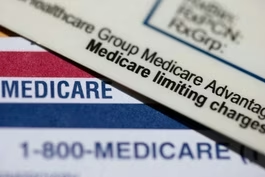
And the challenges extend to Medicare Advantage, the private insurance plan that more than 30 million Americans choose as an alternative to traditional Medicare.
With Medicare's annual open enrollment period now under way, seniors are weighing their options.
But in some parts of the country, insurers are pulling out of markets or eliminating plans that Americans have come to rely on.
We spoke with several seniors struggling to navigate those changes and an increasingly complicated health care system.
SUSAN HAYSE, Medicare Advantage Customer: I'm Susan Hayse, and I have been on the Medicare Advantage program for four years.
BOB HEFFERNAN: Medicare Beneficiary: I'm Bob Heffernan in Vermont, and I was on the Medicare Advantage plan, actually two of them for three years, and when they both withdrew from that system, I switched back successfully to original Medicare.
DIANE PAYNE, Medicare Advantage Customer: I'm Diane Payne.
And my biggest challenge for picking a plan next year is the cost of dental plans and vision are going up.
Deductibles are going -- out of pocket is going up.
And I just want to try to get the best deal for what I'm paying for.
BOB HEFFERNAN: Medicare Advantage was truly superior, in my view, to original Medicare.
It covered the doctor's visits, the lab costs, the prescription drugs, the hospital expenses.
And now I don't have the option to go to Medicare Advantage again because they basically have left the state of Vermont.
DIANE PAYNE: I realized last November that I got diagnosed with breast cancer and I had an agent come to the house to talk to me.
It was hard to figure out what to do.
SUSAN HAYSE: This particular year, it was a big shock.
Every year, you get the notification from your insurance company that there's going to be changes to your policies.
There were things that had copies that were dollar amounts, like $50, changing to 50 percent.
DIANE PAYNE: I saw that chronic illnesses and things like cancer can impact, even on our Advantage plans, how much you're going to pay per office call and visit.
Oh, I'd like to know what I might be getting into.
Am I going to be charged more?
Am I still going to be able to see my oncologist?
SUSAN HAYSE: I have developed a condition that will probably keep me from being able to switch back to original Medicare and a supplemental policy, or it'll be exorbitantly expensive.
BOB HEFFERNAN: Now, of course, we're back to paying for Medigap, which is expensive, and paying for prescription job coverage, which is expensive, and paying for the eye doctor and paying for the dentist.
DIANE PAYNE: Because of the chemo and the radiation, suddenly, dental is really important to me.
And if they're just going to cover the checkups and not cover fillings or any problems, and they cut it, my current plan, I started looking elsewhere.
BOB HEFFERNAN: They all have deductibles now.
So I'm not even adding that in that you're paying up until you hit a deductible, that you have to pay out of pocket before they will even start covering.
SUSAN HAYSE: If I'm unable to switch to original Medicare and a supplemental program because of a preexisting condition, I will switch to a different Advantage program that aligns more closely with the medical network I prefer here in my area.
DIANE PAYNE: It's a legwork for something that should be much simpler.
Just tell us.
Just put it on your plan and just say what will cost.
GEOFF BENNETT: Lots to discuss.
Luckily, we have with us Dan Weissmann, creator and host of the health care podcast "An Arm and a Leg."
It's great to speak with you.
So your team recently examined the changes sweeping through Medicare Advantage.
What did you find?
What accounts for all of these changes and, in some cases, insurance companies dropping the plans that seniors have come to rely on?
DAN WEISSMANN, Host, "An Arm and a Leg": Yes.
And there's no single answer to it, except the biggest picture one, which is the insurance companies are private companies, they're responsible to shareholders, and they have been deciding in a lot of cases these plans that we're offering, it's not going to make us enough money, so we're not going to offer it any more, or we're going to change the terms to be more advantageous to us and less advantageous to you.
GEOFF BENNETT: And for folks who have not yet had to rely on these programs, we should explain or you should explain, what's the difference between Medicare and Medicare Advantage?
DAN WEISSMANN: Traditional Medicare, as people call it, is run by the federal government.
It's kind of what we think of as Medicare.
Unless you're checking into the hospital or getting something at the pharmacy counter, everything else, physical therapy, outpatient surgery, doctor visits, traditional Medicare only covers 80 percent of the bill.
So you're left responsible for 20 percent, which can be, listen to all those things I just said, untold thousands of dollars, depending on your health.
And unlike other insurance these days, there's no out-of-pocket maximum.
So you could be on the hook for almost anything, unless you pay out of pocket for what's called a supplemental plan or a Medigap plan.
And that fills in that gap.
However, there are still some things that traditional Medicare doesn't cover at all, vision, dental, hearing.
People sometimes joke that, these are like luxury organs?
So enter Medicare Advantage.
It's run by private insurance companies.
And they will say, we're going to wrap these things all together.
We're going to give you vision, we're going to give you dental, we're going to give you hearing.
You will not be on the hook for untold amounts of money.
We're going to limit those things for you.
And one thing that comes as a big surprise to a lot of people when I started reporting on it, it was a surprise to me, is, Medicare isn't free.
You pay a premium, about $200 a month for most people to the federal government for it.
Some Medicare Advantage plans are like, we will take care of that for you.
So that is very, very attractive.
Medicare Advantage has what some people think is a downside, which is you're negotiating with a big insurance company for your health care and you're doing it on their terms.
They can tell you, nope, that doctor is not in our network, we don't pay for that.
Or, yes, you say you want that treatment, it's not on our plan.
We're not going to pay for that.
You can fight us if you want.
So these are things that many of us who are under 65 imagine -- did not imagine we would still be fighting over when we got to Medicare, but it is part of Medicare Advantage.
GEOFF BENNETT: For someone who decides that Medicare Advantage is no longer right for them, how easy is it to switch back to traditional Medicare?
Are there financial or coverage obstacles they might not anticipate?
DAN WEISSMANN: Yes, it can be very tough.
In some ways, you get a choice between traditional Medicare and Medicare Advantage when you first enroll in Medicare, when you're generally 65 years old.
And that is mostly a no backsies situation, except for a few states.
When you sign up for Medicare for the first time, you can get a supplemental plan if you want one afterwards.
If you want to switch back to traditional Medicare, they can refuse to cover you, the supplemental plan or a Medigap plan.
They can say, you have a preexisting condition, we don't want to sell you a policy, or we're going to adjust the price of your policy to something you can't pay.
That comes as a big surprise to a lot of people, and this is a thing, because you sign up for Medicare when you're 65, you might be like captain of the pickleball team, everything's great, never go to the doctor.
But you are signing up for Medicare Advantage for an older, perhaps sicker version of yourself.
And that's tough for a lot of people.
GEOFF BENNETT: With open enrollment under way and this December 7 deadline approaching, what should seniors be paying particular attention to?
What's the most important advice you can offer?
DAN WEISSMANN: The first is watch the mail.
If you get a letter from your insurance company saying, we're changing your plan or we're no longer offering your plan, you want to get on that right away.
And then you want to start sussing out your options.
There's kind of two big places to go.
One is Medicare itself operates a hotline.
It's like 1-800-MEDICARE.
Call.
The other is, every state has a program called SHIP.
It's an acronym, but basically, it's a federally funded program that exists to help you understand your choices with Medicare.
Nobody's earning a commission.
They're there to help you.
And to find the one in your state, the best thing to do is go to Google and type in the name of your state, the word SHIP and the word Medicare.
And it should pop right up.
You call those folks, and you want to do it as soon as possible.
In addition to a lot of plans closing this year, some carriers have asked the feds and gotten permission to cap enrollment in some plans.
So you might identify a plan and you're like, that's the one that I want.
And they might say, if you're late, sorry, there's no more room in that plan for you.
So you want to get on it right away.
GEOFF BENNETT: Dan Weissmann, creator and host of the podcast "An Arm and a Leg," thanks for speaking with us.
DAN WEISSMANN: Thanks so much for having me.
GEOFF BENNETT: Screenings of the new documentary "You Can See Everything" are selling out across the country, and it's opening at more theaters today.
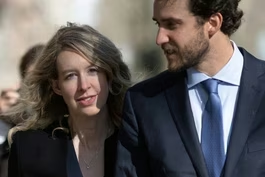
The film is co-directed by Lance Oppenheim and Nathan Fielder, and follows Elizabeth Holmes, the convicted founder of the blood testing company Theranos, just weeks before she goes to prison for conspiracy and fraud.
But the intimate access and the questions it raises are big reasons why it's the talk of this fall movie season.
Senior arts correspondent Jeffrey Brown has more for our arts and culture series, Canvas.
ELIZABETH HOLMES, Former CEO, Theranos: I don't have anything to deceive you on.
Of course I'm not deceiving you.
JEFFREY BROWN: "You can see everything," it was a promise made by Elizabeth Holmes to comedian and filmmaker Nathan Fielder.
And the result is a highly unusual and provocative film.
In 2023, just 34 days before she was set to begin serving an 11-year prison sentence, Holmes and her family invited Fielder and a film crew to their San Diego beach rental.
At one time, Fielder even moved in.
Elizabeth Holmes, seen in the film, joined by her partner, Billy Evans, and two young children, is very different from the public persona many remember, the woman with black turtlenecks and red lipstick who promised to revolutionize health care through her start-up Theranos that claimed it could use a single drop of blood to run hundreds of tests.
Holmes was touted as the youngest ever self-made female billionaire.
But it all came crumbling down after the company's device turned out not to work, and she was convicted of defrauding investors.
For their part, Fielder and co-director Lance Oppenheim have produced an entirely unconventional documentary.
NATHAN FIELDER, Filmmaker: I hope you're hungry for nothing.
JEFFREY BROWN: Before this, Fielder was best known for playing a deadpan version of himself in projects that blend reality and fiction, like "Nathan For You" and "The Rehearsal."
NATHAN FIELDER: I think we're going to get along pretty well.
JEFFREY BROWN: "Off-the-charts bonkers, a movie that defies categorization," just some of what critics are saying of a film filled with plot twists, unexpected turns, no spoilers here, and questions of truth and perception.
ELIZABETH HOLMES: Why would I deceive you?
There's no -- there's no reason for me to do that.
NATHAN FIELDER: OK.
All right.
OK, good chat.
JEFFREY BROWN: And joining me now is Alissa Wilkinson, film critic for The New York Times.
Thanks for being with us.
So why do you think this film is resonating so much?
Is it the subject, the filmmaker, the nature of the film itself, all of the above?
ALISSA WILKINSON, Movie Critic, The New York Times: I think there are a couple of reasons.
I think the subject obviously really is of interest to people, because she's been represented in pop culture so much.
Nathan Fielder is also someone that a lot of people love, including myself.
The kind of some things that he makes are unusual.
But I think that, when you go see the film, you understand that it's actually playing with your sense of reality and how you watch documentaries.
And I think for a lot of people that's really provocative and interesting.
JEFFREY BROWN: All right, so let's walk through some of those briefly.
Nathan Fielder himself, as we said, he's not a traditional documentary maker.
He's not a journalist.
What is -- what do you think he's up to here?
What do you see him doing?
ALISSA WILKINSON: I think of Nathan Fielder as kind of a performance artist who is interested in how audiences watch things.
He started his career as a producer on "Canadian Idol," and so has been thinking about reality TV and the ways that we interact with what we think is real and what might not be real on television.
And this is moving it over into a film context.
And I think that his attempt in here to make us think about how we're watching things and what we believe to be true and how we're manipulated in those things is very relevant to the Elizabeth Holmes story, but also more broadly relevant to the way that we watch basically anything that's presented to us on a screen these days.
JEFFREY BROWN: All right, so then there's Elizabeth Holmes herself, who, as you said, has fascinated people for a long time, been the subject of docudramas, investigations, and so on and so forth.
What portrait of her emerges?
ALISSA WILKINSON: Honestly, I went into seeing this movie assuming I knew everything about Elizabeth Holmes.
I'd watched the documentaries.
I'd watched "The Dropout," which was the Hulu television show about her.
I kind of thought I knew who this person was.
And I think I was constantly second-guessing my perception of her as I watched the film.
And that for me is kind of a novel experience.
The film is much bigger than just Elizabeth Holmes, but I think the first half really gives you a sense of why people might have been taken in, and maybe makes you question whether you think you -- they were taken in or whether she was doing something else entirely.
JEFFREY BROWN: Well, as you know, since the film came out, some of the people who were involved in the investigation and bringing out a lot of the facts early on have been speaking up to make sure that -- to remind us of the facts, right, and of the guilty verdict.
Here's John Carreyrou.
He's an investigative reporter who helped expose Holmes and Theranos in the first place.
JOHN CARREYROU, The New York Times: There's a unwillingness to take any sort of responsibility in Elizabeth Holmes.
There's this subtle blaming of other people that I find incredibly manipulative, because she's doing that at the same time as she's trying to get you to feel sympathy for her.
JEFFREY BROWN: Now, we should say, I mean, in my reading of his review, he seemed to like the film, but he's worried about it humanizing her too much.
Is there any sense, or do you think that this is why she might have agreed to take part in this in the first place?
ALISSA WILKINSON: Yes, there's discussion in the film between her and her partner, Billy Evans, about whether this is a film that -- they have invited people into their home in order to say that they are very open and they're very vulnerable and they're very honest.
I don't think that's the picture that emerges of her at all, but certainly you watch it and you have a different perception of her by the end.
JEFFREY BROWN: How do we look at this film?
Is it pushing the boundaries of documentary?
Is it even right to call it a documentary?
ALISSA WILKINSON: It's absolutely a documentary by the definition that I use.
It's shaping a story out of reality.
That said, there are documentaries dating back to the beginning of documentary, 100 years ago, that are also calling into question what is real and what is not.
I think of the great documentarian Frederick Wiseman, who passed away this year, who always told me in interviews that, "I don't make documentary, I make fiction," because he feels like he takes reality and shapes a story out of it.
And, here, this is pushing that to the limit, but what I love about it is that it's making people think about the fact that every documentary they watch is using those same tools.
JEFFREY BROWN: All right, Alissa Wilkinson of The New York Times, thank you very much.
ALISSA WILKINSON: Thank you.
GEOFF BENNETT: Be sure to tune into "Washington Week With The Atlantic" later tonight right here on PBS.
Jeffrey Goldberg and his panel discuss President Trump's busy campaign schedule and whether his message is helping or hurting vulnerable Republicans.
And watch "Horizons" this weekend .William Brangham talks to doctors about gun violence as a public health crisis.
Plus, on "Compass Points," our Nick Schifrin sits down with Canada's former Deputy Prime Minister Chrystia Freeland for a look at how America's allies view President Trump and his administration.
NICK SCHIFRIN: Let me ask another question about your perception of how Washington works.
It's the summer of 2025.
You're still in government, and a friend and senior Canadian businessman asks you -- quote -- "whether the government of Canada was considering offering gifts to the Trump family."
"It wasn't the Canadian way, he told me, but maybe it was what was needed to do to protect our economy.
There was one particular consulting firm -- he named it, but I won't -- close the administration that could ensure that clients, including countries, got a good deal.
Hire them as your advisers, he'd been told, and you will get what you need.
In Trump's Washington, the opportunities for corruption are vast, blatant, and evergreen."
How vast and how blatant, in your opinion?
CHRYSTIA FREELAND, Former Canadian Deputy Prime Minister: Extremely.
And part of the perversity of what is happening right now of how America is treating the world is, it is better to be a corrupt authoritarian regime in Washington than a democracy that is a traditional U.S.
ally, because the corrupt authoritarian regimes, for them, this is business as usual.
They know -- it's very familiar.
It's how they themselves operate.
And they have no problem having a private conversation, like, OK, that's the firm I use.
Excellent.
And guess what?
A luxury jet is delivered.
An investment is made in a crypto firm.
Democracies can't do that.
And I think that it is really -- it erodes what has made America great.
I think ultimately it's going to weaken America's economy.
And it really frays relationships with the countries that I think America has historically had and should continue to have the closest ties.
GEOFF BENNETT: You can watch both "Horizons" and "Compass Points" on our YouTube channel or wherever you get your podcasts, and, of course, on your local PBS station this weekend.
Check your local listings.
And that is the "News Hour" for tonight and this week, friends.
I'm Geoff Bennett.
For all of us here at the "News Hour," thanks for spending part of your evening with us and have a great weekend.
Brazil's high-stakes runoff could reshape its future
Video has Closed Captions
Brazil's high-stakes presidential runoff could reshape country's future (5m 56s)
Capehart and Ponnuru on threat to block Alaska results
Video has Closed Captions
Capehart and Ponnuru on Trump's threat to block Alaska election results (9m 32s)
Medicare Advantage cuts leave many scrambling for coverage
Video has Closed Captions
Medicare Advantage cuts leave millions scrambling to find coverage (9m 2s)
News Wrap: White House says Melania Trump brokered ceasefire
Video has Closed Captions
News Wrap: White House says Melania Trump brokered localized ceasefire deal in Oleshky (4m 45s)
Oregon father describes stopping school shooter
Video has Closed Captions
'There's babies in there': Oregon father describes stopping school shooter (4m 15s)

Surging diesel prices put Iowa in play this election cycle
Video has Closed Captions
Surging diesel prices loom over Republicans in Iowa's midterm races (4m 22s)
Trump orders suit to block Alaska results if GOP loses
Video has Closed Captions
Trump says he ordered suit to block Alaska Senate results if GOP loses (3m 58s)
Why 'You Can See Everything' is captivating audiences
Video has Closed Captions
Why 'You Can See Everything' is captivating audiences (7m 31s)
Providing Support for PBS.org
Learn Moreabout PBS online sponsorship New Episode
- News and Public Affairs

Today's top journalists discuss Washington's current political events and public affairs.

- News and Public Affairs

FRONTLINE is investigative journalism that questions, explains and changes our world.
 New Episode
 New Episode
 New Episode
 New Episode

 New Episode
 New Episode

 New Episode


 New Episode
Support for PBS provided by:
Major corporate funding for the PBS News Hour is provided by BDO, BNSF, Consumer Cellular, American Cruise Lines, and Raymond James. Funding for the PBS NewsHour Weekend is provided by...